
How Manufacturers Think About Sliding Door Maintenance
By Daniel Lamar · Local focus: Central Florida · 4 min read
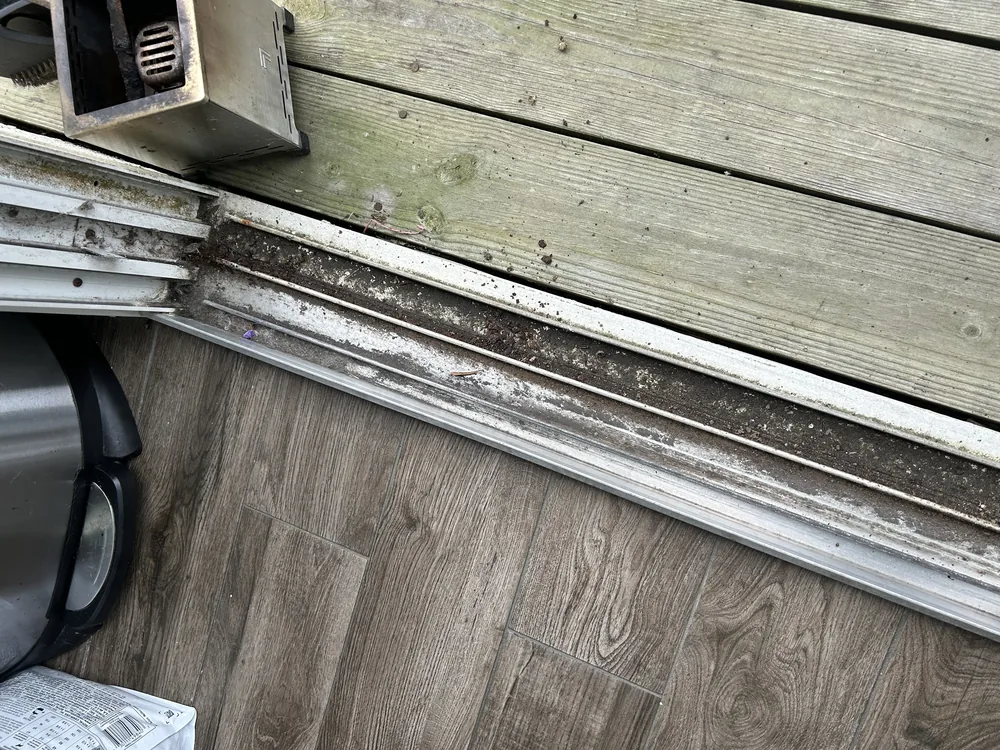
Across major manufacturers, the recurring principles are simple: keep running surfaces clean, maintain correct adjustment, and use compatible hardware. Andersen discusses panel reveal and roller adjustment; Pella emphasizes clean tracks; AmesburyTruth catalogs multiple roller families for different applications.
Sometimes the real problem began on installation day
Lincoln Sliding Doors sees cases where the original installation was not done correctly. New rollers can improve a worn rolling system, but they cannot square a badly positioned frame or correct an installation defect. Recurring alignment problems should trigger an inspection of the opening itself.
What should be checked after the repair
A finished repair should be tested through the full travel. The panel should sit correctly in the opening, the lock should engage without lifting or slamming the handle, and the track should give the wheels a consistent running surface. Smooth movement is important, but alignment and locking are part of the result too.
Why this matters in Central Florida
Central Florida includes both coastal and inland conditions. The useful diagnosis follows the actual hardware, track and geometry rather than assuming salt exposure is responsible for every difficult door.
Start with what the door is doing
Note whether the resistance follows the panel or happens at one fixed point. Listen for rumbling versus scraping. Look at the vertical gap where the moving panel meets the jamb. Test whether the lock aligns naturally. Those observations help separate roller, track and alignment problems before parts are ordered.
Repair, adjustment, track work—or replacement?
Cleaning and normal adjustment are appropriate when contamination or ordinary alignment is the real cause. Roller replacement belongs in the conversation when wheels, bearings or housings are worn, seized or broken. Track repair or replacement is relevant when the running surface is gouged, crushed, badly worn or otherwise unsuitable for the wheel.
A hard-to-move door alone is not proof that the complete unit needs replacement. Conversely, repeated hardware replacement cannot correct a severely distorted frame or a poor original installation. Lincoln Sliding Doors has encountered installation and frame-position problems where the opening itself needed to be corrected.
Older doors deserve careful parts identification. Roller assemblies are not universal. Housing dimensions, wheel geometry, mounting points and adjustment style can all matter. Lincoln Sliding Doors has encountered old doors where sourcing the correct roller was difficult; that is a reason to measure and identify carefully, not automatically a reason to discard the complete door.
Why forcing it can turn one repair into two
A sliding glass panel puts substantial load on a small number of rolling contact points. If a wheel stops turning and the panel is forced, the housing or bottom rail can scrape the track. What started as roller wear can become track damage, poor alignment and a lock complaint.
A note about grease, WD-40 and “quick fixes”
One of the most useful maintenance distinctions is between cleaning a track and coating it with an oily product. Lincoln Sliding Doors commonly sees doors where grease or ordinary WD-40 was used as a quick fix. Residue can trap grit, hair and dust and create a contaminated wheel path. Pella has published guidance warning against penetrating oil or similar oils on certain roller tracks.
That does not mean every product carrying the WD-40 brand is identical; dedicated dry-lubricant products are different from ordinary penetrating/oily sprays. The safe editorial rule is simple: clean first, follow the specific door/hardware manufacturer’s instructions, and do not use lubricant to hide a failed roller or damaged track.
Lincoln Sliding Doors
Lincoln Sliding Doors serves Daytona Beach and surrounding communities with sliding glass door repair, stainless-steel roller replacement, track repair and replacement, locks and handles, glass, frames, screens, installations, window repair and commercial/automatic sliding-door service.
Lincoln Sliding Doors uses stainless-steel rollers manufactured for the business in the Far East.
Call 386-387-5140 to schedule serviceFAQ
Can a dirty track and destroyed rollers feel similar?
Yes. Both can make the door difficult to move. Cleaning is a useful first check, but persistent grinding, rocking, scraping or failed adjustment points toward a mechanical issue.
Can failed rollers damage the track?
They can. A seized or broken roller can stop carrying the panel correctly, and continued forcing can damage the running surface.
Should I put grease or ordinary WD-40 on the exposed track?
Do not treat an oily product as a universal cure. Residue can retain contamination. Follow the actual manufacturer’s maintenance instructions and repair failed hardware mechanically.
Are old sliding-door rollers universal?
No. Older assemblies can be difficult to identify and match. Measurements and mounting geometry matter.